Local SEO and CRO case study
How Local SEO and CRO Increased Organic Clicks by 72% for a Dubai Dental Group
A bilingual local SEO strategy that connected dental treatments with clinic locations—and improved the path from organic search to patient enquiry. By developing a scalable Service × Location structure, improving the value of individual clinic pages and introducing conversion-focused changes, I helped the dental group increase organic clicks by 72% year on year, alongside an estimated 40% uplift in organic leads.
Performance
Key Results
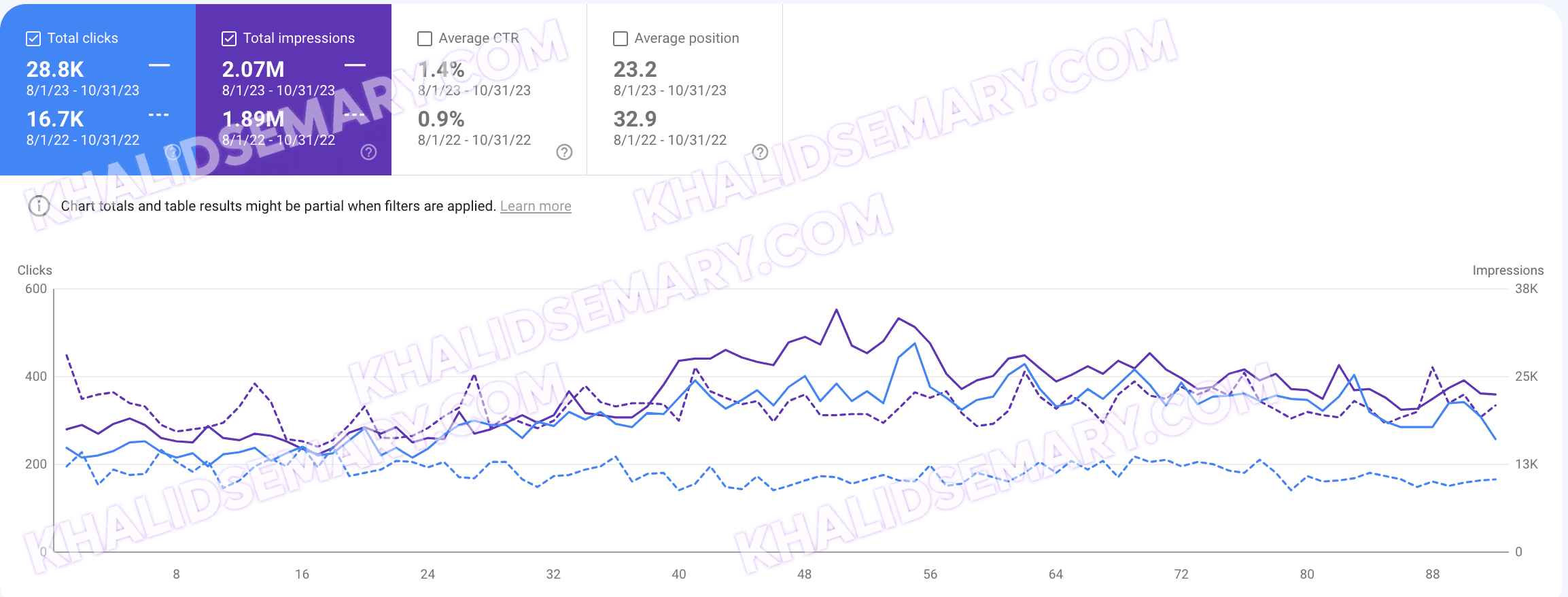
Organic performance source: Google Search Console
+72% year-on-year growth in organic clicks
16.7K to 28.8K organic clicks
Approximately +40% growth in organic leads
Stronger coverage of high-intent English and Arabic searches
About the Client
The client is an established dental group operating across multiple clinic locations in Dubai.
Its website needed to represent a wide range of dental treatments, different clinic locations and search demand across both English and Arabic.
Organic search also needed to play a larger role in patient acquisition. The goal was not simply to generate more website traffic, but to capture people actively looking for a particular dental treatment in a location convenient to them—and make it easier for those visitors to enquire or book.
The Problem
Patients rarely search for dental services using broad terms alone. They are more likely to search for a specific treatment, dentist or clinic in a particular area.
The existing website covered the group’s treatments and locations, but it did not consistently connect the two.
Broad treatment pages were expected to compete across several areas, while clinic location pages contained limited information about the services available at each branch. This restricted the website’s ability to target more specific, bottom-of-funnel searches.
The existing location pages also offered limited value beyond confirming that a clinic existed in a particular area. They did not fully answer the questions a prospective patient might have before choosing a location or making an enquiry.
The bilingual website created an additional challenge. English and Arabic patients do not always use the same terminology or search in exactly the same way, so the Arabic website could not simply be treated as a direct translation of the English version.
Finally, attracting more traffic would have had limited commercial value if visitors still struggled to find the right treatment, understand what each location offered or take the next step.
The Goals
The programme focused on five connected objectives:
- Increase visibility for high-intent dental searches in Dubai.
- Capture searches combining specific treatments and locations.
- Improve organic coverage across English and Arabic.
- Add meaningful patient value to individual clinic pages.
- Convert more organic visitors into calls, appointment requests and enquiries.
The Strategy
I developed a local SEO and CRO framework based on the main decisions being made by a prospective patient:
- 1What treatment do I need?
- 2Which clinic location is most convenient?
- 3Does that location offer the treatment?
- 4Can I trust this provider?
- 5How easily can I call, enquire or book?
The SEO strategy connected relevant treatments with the clinic locations where they were available. The CRO work then made the resulting pages clearer, more useful and easier to act on.
Instead of creating pages simply to target different location keywords, the objective was to build useful local landing pages that could support the patient’s decision from initial search through to enquiry.
What I Did
Mapped Treatment and Location Demand
I reviewed search demand around the group’s priority treatments and clinic locations, focusing on terms that indicated a patient was actively looking for a provider.
Informational searches were useful for understanding the broader market, but the main priority was commercial and transactional intent. This included searches combining:
- A dental treatment or procedure.
- A clinic, dentist or provider requirement.
- A specific Dubai location or nearby area.
- English or Arabic treatment terminology.
The English and Arabic search markets were reviewed separately. This made it possible to account for differences in terminology and search behaviour rather than assuming that the same keyword structure would work equally well in both languages.
Developed the Service × Location Structure
Based on the research, I introduced a scalable hierarchy connecting priority treatments with the clinic locations where they were genuinely available.
This gave the website more specific landing-page opportunities for searches that broad service or general location pages could not target effectively.
The structure was not based on creating every possible treatment-location combination. Each opportunity had to satisfy three conditions:
- There was relevant search demand.
- The treatment was genuinely available at the location.
- The page could provide enough unique value to a prospective patient.
This selective approach helped avoid thin, repetitive pages created solely to rank for slightly different location keywords.
Turned Clinic Pages Into Useful Local Landing Pages
The clinic pages needed to do more than display an address and contact information.
I expanded the role of these pages so they could help patients understand what was available at each location and decide whether that clinic was suitable for their needs.
Depending on the location, this included strengthening or recommending content around:
- Treatments and services available at the clinic.
- Clinic-specific information rather than repeated generic copy.
- Dentists or specialists associated with the location.
- Opening hours and contact information.
- Directions, nearby areas and practical location details.
- Patient-focused FAQs.
- Trust signals and reasons to choose the clinic.
- Clear options to call, enquire or request an appointment.
This added genuine value to the location pages while also giving search engines clearer information about the relationship between each clinic and its available treatments.
Aligned Pages With Commercial Search Intent
Priority pages were aligned around the treatment and location they were intended to target.
Page titles, headings, opening content and supporting on-page signals were refined so each page had a clear search purpose.
The content still needed to sound natural and remain useful to patients. The approach avoided repeatedly inserting treatment and location names purely for SEO.
Someone arriving from a specific search should immediately be able to confirm:
- They had reached the correct treatment page.
- The treatment was available in a relevant location.
- The clinic could meet their immediate needs.
- There was a clear next step if they wanted to enquire.
Improved the Conversion Journey
The work extended beyond rankings and traffic. I also reviewed how visitors moved from the landing page to an enquiry or appointment request.
Conversion-focused recommendations were introduced across priority service and location pages to reduce uncertainty and make the next step more obvious.
This included improving:
- Above-the-fold clarity.
- CTA prominence and wording.
- Access to call and enquiry actions.
- The visibility of appointment options.
- The placement of trust and reassurance elements.
- Connections between treatment and location pages.
- Mobile access to important conversion actions.
- The overall path from service discovery to enquiry.
The objective was not to add more buttons to every page. It was to place the right action where a prospective patient was most likely to need it.
For example, someone landing on a clinic page could quickly review the available treatments and contact that location. Someone entering through a treatment page could identify a suitable clinic and move directly towards an appointment request.
Coordinated the English and Arabic Websites
The Arabic pages followed the same overall commercial framework, but their targeting was based on Arabic search behaviour rather than word-for-word translation.
This allowed both language versions to support the same treatments and locations while reflecting the terminology people actually used in each market.
The bilingual framework also made it easier to identify:
- Missing treatment or location coverage.
- Pages with mismatched search targeting.
- Inconsistent English and Arabic information.
- Future opportunities across either language.
This created a more consistent structure without forcing identical keyword decisions across two different search markets.
Strengthened Internal Linking and Page Relationships
Internal links were used to connect relevant treatment and clinic pages.
Treatment pages could guide users towards clinics offering that service, while location pages could direct patients towards the treatments available at that branch.
This supported both discoverability and usability. Search engines could understand the relationship between treatments and locations more clearly, while patients had a more direct route to the information they needed.
Standardised Local and Structured Signals
Relevant structured data and local page signals were standardised across priority templates.
The purpose was to provide clearer and more consistent information about the dental group, its clinic locations and the services represented on each page.
Structured data supported the wider site architecture and on-page work. It was not treated as a standalone solution or a guarantee of Local Pack visibility.
The Main Challenges
Scaling Without Creating Low-Value Pages
The biggest risk with a Service × Location strategy is creating large numbers of pages that are almost identical.
To avoid this, opportunities were assessed against actual treatment availability, location relevance, search demand and the ability to provide useful local information.
The structure was designed to expand selectively rather than generating every theoretical combination.
Adding Genuine Value to Location Pages
Changing the location name in otherwise identical copy would not have improved the patient experience or created a strong long-term SEO asset.
Each priority location page therefore needed a genuine purpose, supported by clinic-specific information, relevant treatments, practical details and a clear enquiry path.
Managing Two Different Search Markets
English and Arabic users can describe the same dental treatment differently. Search volumes, terminology and query structure may also vary.
The strategy needed to maintain a consistent website hierarchy without forcing identical targeting decisions across both languages.
Balancing Traffic Growth With Lead Quality
More organic visits would not automatically mean more valuable patient enquiries.
The work therefore prioritised searches with clear treatment and location intent, while the CRO recommendations helped visitors confirm relevance and take action more easily.
This kept the programme focused on commercially useful growth rather than traffic alone.
The Results
The website recorded a 72% increase in organic clicks, growing from approximately 16.7K to 28.8K clicks when comparing 1 August–31 October 2023 with the same period in 2022, based on Google Search Console data.
The improvement followed a shift from broad targeting towards a more precise local acquisition structure based on treatments, locations and language-specific search demand.
Organic leads also increased by an estimated 40% during the campaign period.
The lead growth was supported by two connected improvements:
- More prospective patients reached pages closely matched to their treatment and location needs.
- Those pages provided clearer information and a more direct route to calling, enquiring or requesting an appointment.
The project also gave the dental group a stronger foundation for future SEO activity. New treatments and location opportunities could be evaluated against the same framework rather than being added as disconnected pages.
Why It Worked
The strategy reflected the complete decision being made by a prospective patient.
Someone was not simply searching for “dentistry.” They were looking for a specific treatment, at a location they could conveniently visit, using the language they were most comfortable with.
They also needed enough information and reassurance to take the next step.
Connecting treatment demand, location relevance, useful page content and conversion actions gave each priority page a clearer commercial purpose.
The result did not come from publishing more pages for the sake of volume. It came from creating a better match between patient demand, website structure and the enquiry journey.
Conclusion
Local SEO for a multi-location healthcare business involves more than optimising clinic listings or adding location names to existing content.
The website needs to reflect the treatments available at each clinic, provide useful local information and make it easy for prospective patients to move from research to enquiry.
By combining a scalable English-and-Arabic Service × Location framework with stronger location pages and conversion-focused improvements, the dental group achieved:
- 72% year-on-year growth in organic clicks.
- An estimated 40% increase in organic leads.
- A more useful and commercially focused local search experience.
The project created a stronger acquisition framework that could continue expanding as the group introduced new treatments or clinic locations.
Looking to Improve Your Local Search Visibility?
I help multi-location and service businesses connect search demand, website structure, local content and conversion journeys with the pages most likely to generate qualified enquiries.